The Design
One big room
The concept is a single daylit volume under a 5/8-sphere geodesic shell. No hallways, no spare rooms — you cook, sleep, bathe, move, and grow plants in one place, and every function shares the same light.
Here it is, whole — an AI-generated concept (Grok Imagine) that captures the vibe better than any of the rough 3D studies can: a rope net loft under the oculus, gymnastic rings, a freestanding tub, plants along the glazed band, and wall bars, all in one room.
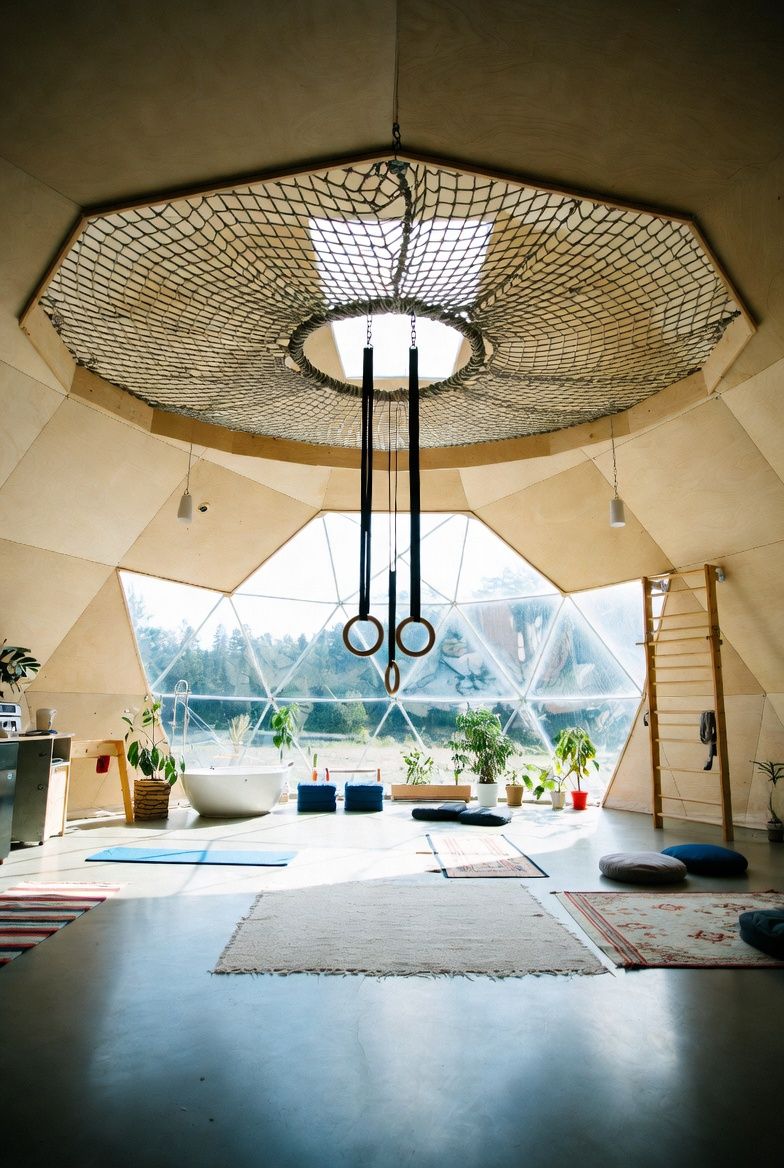
Underneath that dream is real geometry. It starts as a bare, translucent shell.
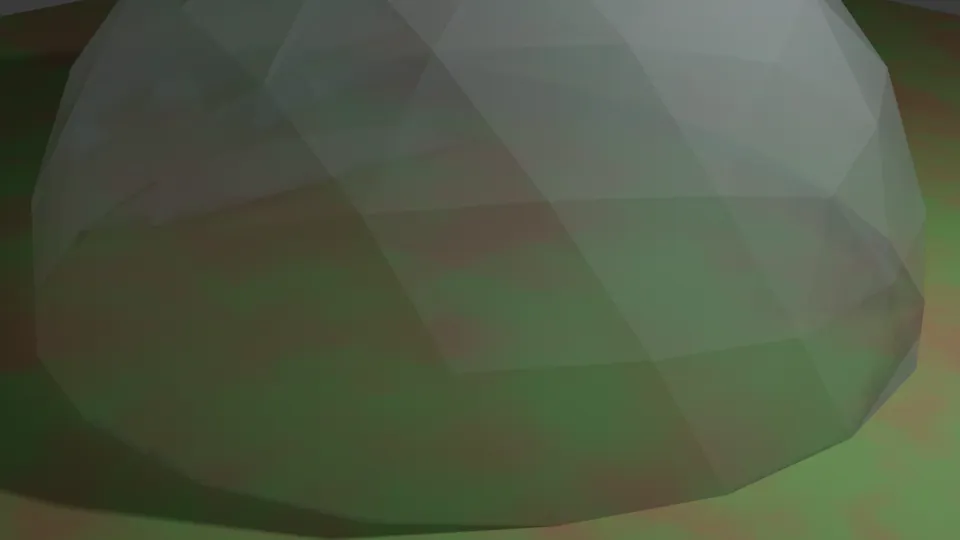
It starts as a bare, translucent shell — a 5/8 sphere, taller than a hemisphere so the walls stand up before they curve overhead. That extra eighth is what makes the interior livable instead of a shallow igloo.
Building the room, one layer at a time
The design wasn’t drawn all at once. It was grown in Blender, one honest layer at a time: a floor, then a kitchen, then furniture, then the things that make a dome feel like this dome.
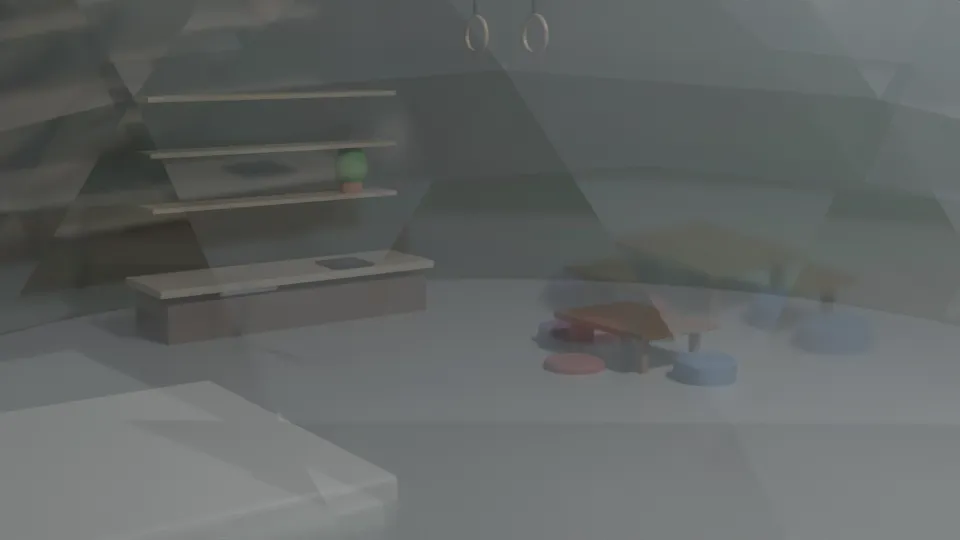
The kitchen hugs the perimeter — a curved counter and floating shelves that follow the shell instead of fighting it. Curved walls are famously hard to furnish; the answer is to stop bringing in rectangles and let the built-ins trace the curve.
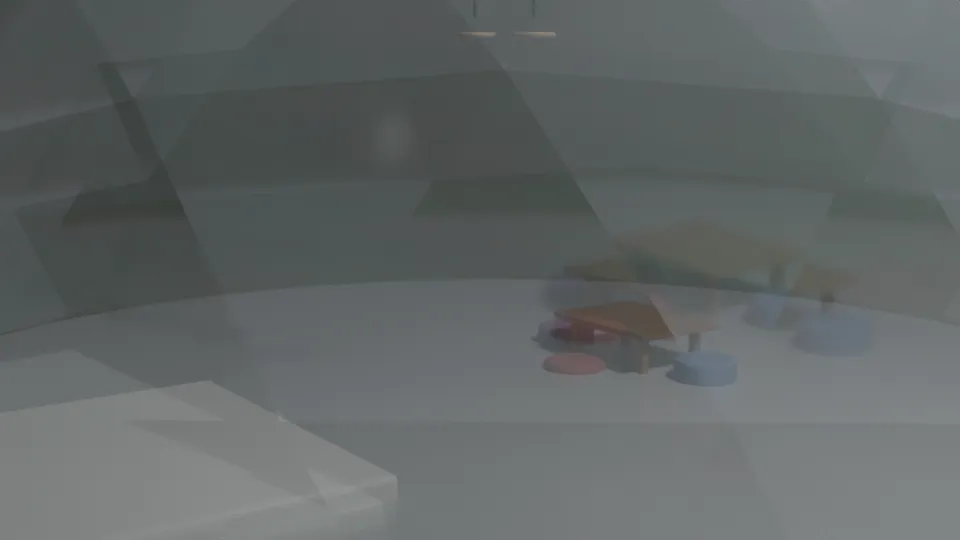
From the apex hang gymnastic rings. The open center of a dome is its best feature — so the design keeps it clear and hangs movement from the top: rings, a climbing-net loft, wall bars around the edge. The room is the gym.
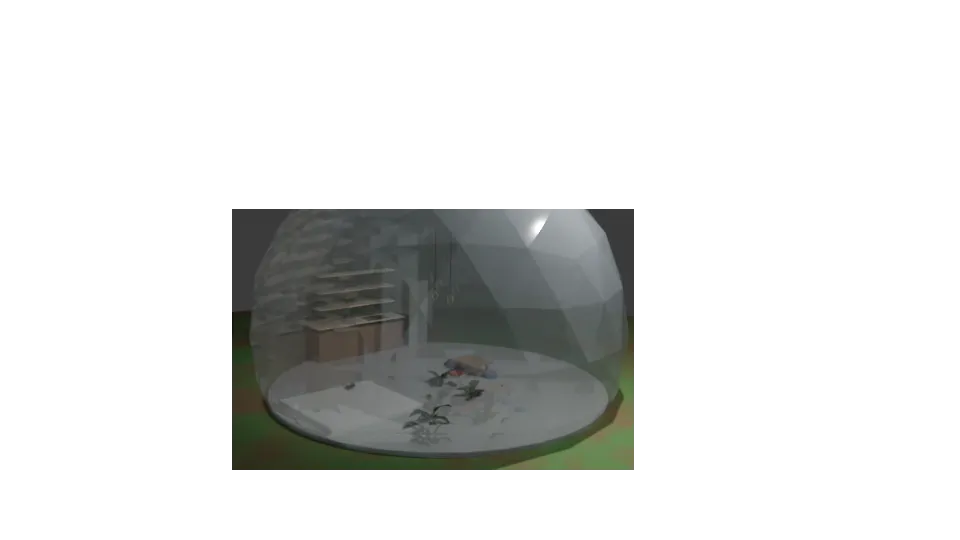
Then plants — along the glazed band where the daylight lands. This is the biophilic heart of the idea: a warm, living, one-room interior, more terrarium than house.
The geometry
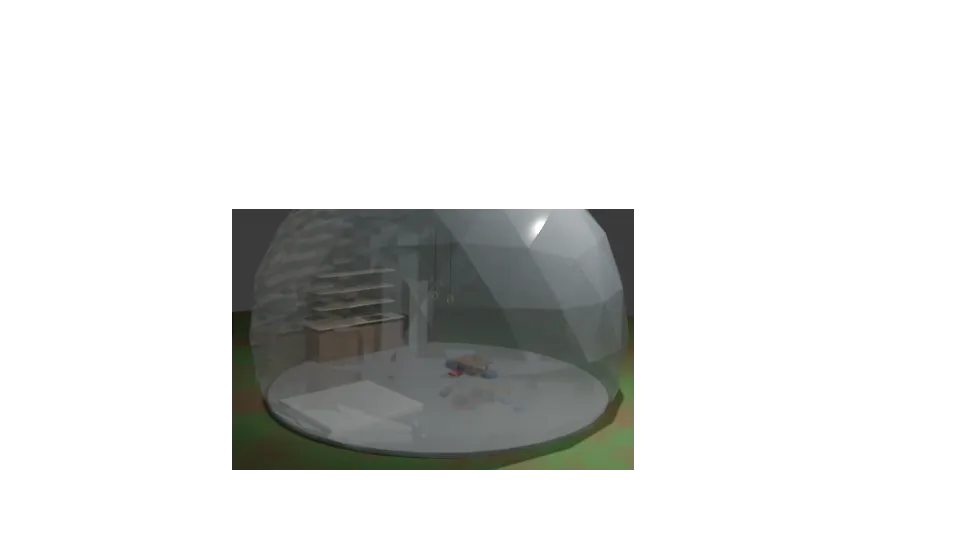
Underneath the mood is real geometry — a corrected 5/8-sphere geodesic frequency study. Getting the sphere fraction right is what gives the room its usable wall height and its central oculus.
Concept clips
Alongside the renders, a set of AI-generated “dollhouse” cutaways explore the same idea — isometric slices and slow interior fly-throughs of biophilic dome rooms. They’re studies, not photographs (see About for provenance).
See the rest in the full gallery, or weigh how you’d actually build one on Build Methods.